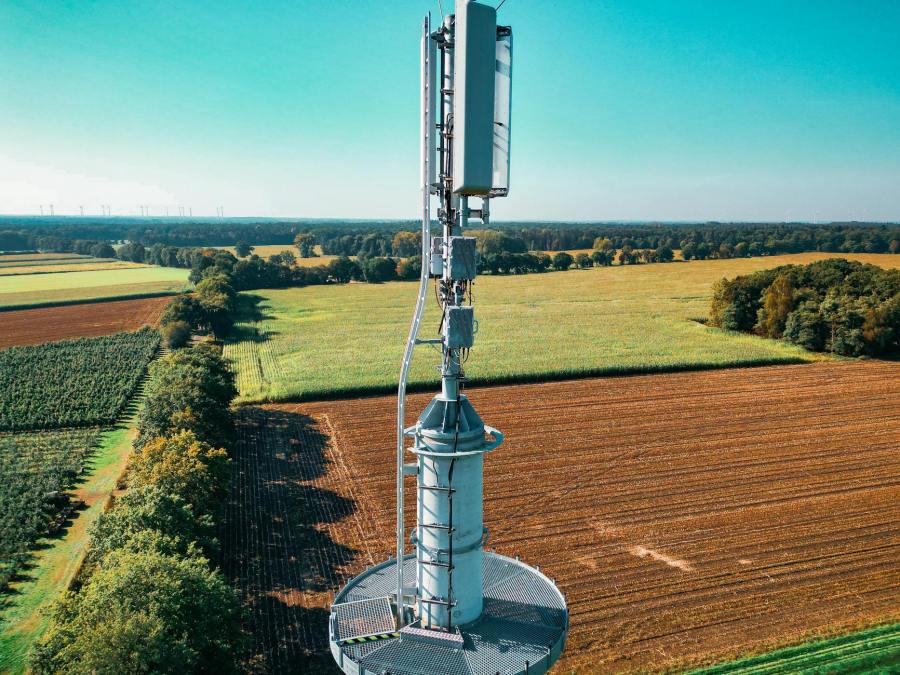
Despite the South East of England being one of the most economically active regions in the country, many rural communities across Surrey, Sussex and Kent continue to face frustrating gaps in both broadband and mobile phone coverage, and Limpsfield is no exception.
In rural areas such as Limpsfield and particularly Limpsfield Chart, broadband provision can be inconsistent. While fibre rollout has improved access in some locations, more remote properties, especially those in farmland or wooded settings, often remain underserved. For residents and home-based businesses, this can mean slow speeds, unreliable connections and limited provider choice.
Mobile coverage presents an equally challenging picture. Limpsfield Chart is widely recognised as an area of particularly poor signal, with dropped calls and weak data connectivity a regular frustration. Yet even in more built-up locations such as Oxted town centre, coverage can be unreliable. Dense building layouts, combined with surrounding tree cover, can interfere with signal strength, highlighting that this is not just a rural issue, but one affecting everyday activity in local high streets as well.
Nationally, the Shared Rural Network (SRN) aims to address these challenges by improving 4G coverage, particularly in rural “not-spot” areas. Backed by government and mobile network operators, the programme is working towards coverage across 95% of the UK’s landmass. While progress is being made, delivery is gradual, and many communities, including parts of Limpsfield, are still waiting to see meaningful improvements.
A key issue remains the lack of a cohesive, joined-up approach between communications providers. Each operator makes independent, commercially driven decisions about where to invest, which can lead to uneven coverage – strong in some areas, absent in others.
At the same time, local authorities and parish councils have limited powers to influence infrastructure rollout. While they can advocate, facilitate discussions, and support planning applications, they are not able to direct or require investment.
As reliable digital connectivity becomes increasingly essential for work, education, and daily life, the need for a more coordinated and responsive approach is clear. Without it, communities like Limpsfield risk remaining on the wrong side of the digital divide, despite being just a short distance from well-connected urban centres.
What is being done locally?
While responsibility for telecommunications infrastructure sits with private providers, Limpsfield Parish Council, alongside County Councillor, Cameron McIntosh and our District Councillors, has been actively working to push for improvements, albeit within very limited powers.
This has included:
- Ongoing engagement with broadband providers such as Openreach and AirFast to better understand fibre rollout plans and explore opportunities to extend coverage.
- Working with MPs, Cabinet Members and county representatives to raise the profile of connectivity issues and seek support for intervention.
- Launching a resident survey to map real-world coverage gaps and build an evidence base to support discussions with providers.
- Exploring alternative funding streams, including government-backed schemes such as Project Gigabit.
- Facilitating conversations with mobile network operators and infrastructure providers regarding mast locations, upgrades and potential new sites.
- Investigating lower-impact solutions such as small-scale infrastructure and ways to improve existing mast performance.
The Parish Council has also played a key role in bringing stakeholders together, helping to open lines of communication between residents, Councillors, and telecoms companies—something that would otherwise be difficult to achieve at a local level.
However, a central challenge remains: there is no single, coordinated strategy across providers. Each company makes independent, commercially driven decisions about where to invest, often resulting in duplication in some areas and persistent gaps in others. Local authorities and parish councils can advocate and facilitate, but they cannot compel delivery.
As reliable digital connectivity becomes increasingly essential for work, education and daily life, the need for a more joined-up, responsive approach is clear. Without it, communities like Limpsfield risk remaining on the wrong side of the digital divide, despite being just a short distance from well-connected urban centres.
General information on mobile coverage:
Poor mobile coverage in parts of Surrey is primarily caused by hilly, valley-filled geography, dense foliage (Surrey is the most wooded county in the country) and thick walled (older) buildings.
Rural areas often suffer from limited infrastructure investment, creating “not-spots,” while in town centres, high user congestion overloads networks, leading to poor performance.
- Train Corridor Issues: Commuter lines, such as those passing through the Surrey hills, frequently pass through cuttings and remote areas, making continuous high-speed coverage difficult for operators.
- Geographical Hurdles: Surrey’s undulating landscape, including the South Downs and hilly/valley areas around Godalming, interrupts the direct line-of-sight required for mobile signals.
- Rural “Not-spots”: Rural areas face consistent issues where there is a lack of network infrastructure investment, despite some efforts from the Shared Rural Network.
- Infrastructure & Planning: Older infrastructure struggling with modern data demands and delays in obtaining planning permission for new, essential masts (often referred to as “mast blockers”) limit network improvements.
- Environmental Factors: Dense tree coverage can obstruct signals in rural Surrey, and building materials in older properties can prevent signal penetration. You may notice an improvement in winter when there is less foliage; but poor coverage in summer.
- Network Congestion: High demand in densely populated spots or popular areas can overload existing towers, slowing speeds and dropping calls.
Discover more from Limpsfield Parish Council
Subscribe to get the latest posts sent to your email.
 Limpsfield Parish Council